

KLI Colloquia are invited research talks of about an hour followed by 30 min discussion. The talks are held in English, open to the public, and offered in hybrid format.
Join via Zoom:
https://us02web.zoom.us/j/5881861923?omn=85945744831
Meeting ID: 588 186 1923
Fall-Winter 2026/27 KLI Colloquium Series
1 October 2026 (Thurs) 3-4:30 PM CET 
Scientific Integration as Fit: The Developmental Biases of Interdisciplinarity
Olesya BONDARENKO (KLI)
8 October 2026 (Thurs) 3-4:30 PM CET
The Role of Conversational Cues in the Co-Evolution of Language and Cooperation
Theresa MATZINGER (University of Vienna)
5 November 2026 (Thurs) 3-4:30 PM CET
Kin Matters: An Intervention in the Fragile Sciences
Robert A. WILSON (University of Western Australia)
19 November 2026 (Thurs) 3-4:30 PM CET
Modeling the Evolution of Human Early Embryogenesis with Stem Cells
Nicolas RIVRON (Institute of Molecular Biotechnology/IMBA, Vienna)
3 December 2026 (Thurs) 3-4:30 PM CET
Peter TURCHIN (Complexity Science Hub, Vienna)
10 December 2026 (Thurs) 3-4:30 PM CET
On the Cultural Macroevolution of Intentional Cranial Modifications
Marcelo SÁNCHEZ-VILLAGRA (University of Zurich)
14 January 2027 (Thurs) 3-4:30 PM CET
DNA from Archaeological Sediments as a Tracer for Past Societies
Benjamin VERNOT (University of Vienna)
28 January 2027 (Thurs) 3-4:30 PM CET
Beyond Fear: How the Amygdala Links Interoception and Exteroception
Ronald SLADKY (University of Vienna)
KLI Colloquia 2014 – 2026
Event Details
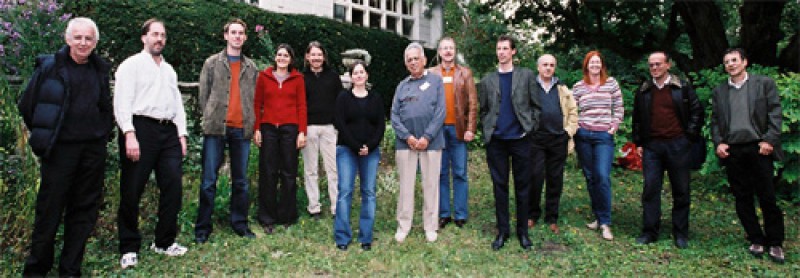
Picture Gallery
For a number of reasons, empirical research on human communication at a descriptive ethological level has almost become obsolete. In part this is due to methodological problems related to the observation and description of behavior, but in part also to the nature of human behavior itself. In 1921 the Viennese psychologist Auguste Flach wrote in the conclusion of her PhD thesis: “Ein Symbol allein, eine Geste ist mehrdeutig. Eindeutig und überzeugend ist dagegen nur die Dynamik der Bewegung." (A symbol or gesture by itself is ambiguous. Only the dynamics of a movement is unambiguous and convincing.) A comparable view may be found in Konrad Lorenz´s idea of the impossibility of an ethological approach to the description of mammalian communication. Lorenz was convinced that in mammals, “atomization“ of behavior had occurred, i.e., each unit has a communicative meaning of its own. However, considering that many communicative channels can be active at the same time, he came to the conclusion that the descriptive ethological approach could not be applied to human communication. At this time Lorenz was not considering the possibility of qualitative changes in behavior that could convey the actual message. New approaches have changed the situation dramatically in recent years. A fast growing body of literature now deals with the quality of human motion, its underlying brain mechanisms, and the possible theoretical consequences of these findings. Communication is no longer understood as a series of sequentially transferred signals, but rather as a dynamic system of cross-modal attunement. The recently discovered "mirror neurons" are understood to act as the brain´s core communication device. Constant and real time "mirroring" of conspecifics could provide direct mutual assessment of emotions, feelings, and hence behavioral tendencies, intentions, and goals. This mirror system seems to be crucial to establish an empathic link between individuals. Communication is now seen as an interaction consisting of attention regulation, engagement, intentional affective signaling, and affectively mediated thinking. As a multi-channel and multi-unit process (a string of many events interrelated in “communicative” space and time), and in relation to the function it serves, it is highly context-dependent (the meaning of a signal is adapted to the situation). Several studies have shown that in human communication, motion carries far more information than the semantic content. Within this approach, it is also assumed that human communication is primarily analog but not signal-oriented. As contradistinguished from symbolic communication (e.g., intentional use of speech and signs with conventional semantics) it would consist of many indicators of non-conscious, non-verbalizable, and non-memorizable mental processes that are expressed through the quality of motion itself. It has indeed been shown in several studies that communication can work without involving direct cognitive processing. However, the consequences constitute a threat for semiotics-based communication theories and even for conventional assumptions about the existence of a theory of mind.
