

News
2019-10-09
New book of the Vienna Series in Theoretical Biology
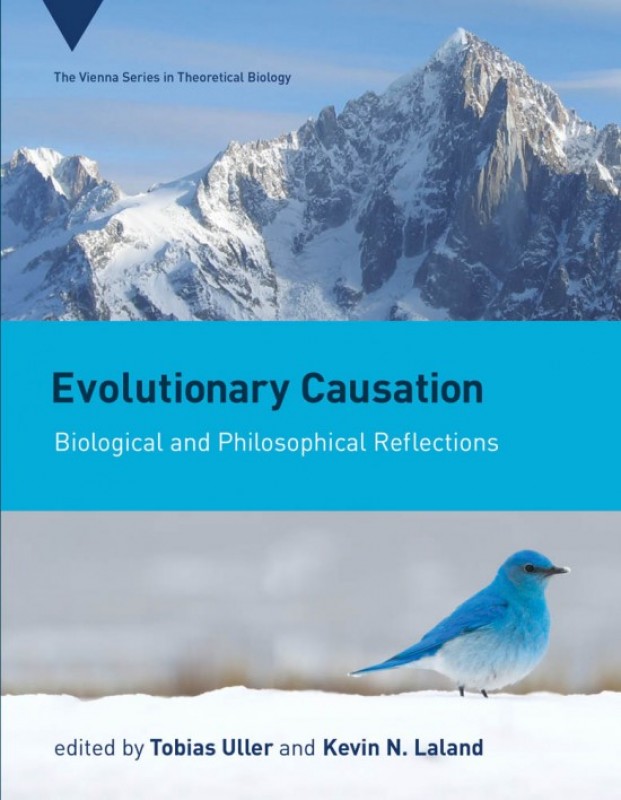
'Evolutionary Causation' edited by Tobias Uller & Kevin N. Laland.
A comprehensive treatment of the concept of causation in evolutionary biology that makes clear its central role in both historical and contemporary debates.
2021-04-26
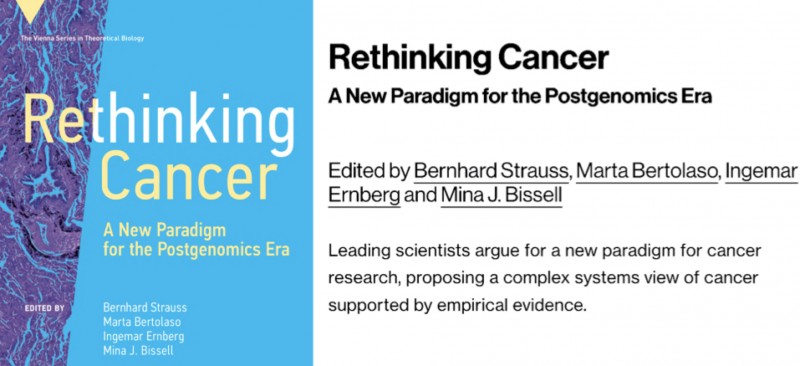
New book in Vienna Series in Theoretical Biology: Rethinking Cancer
Leading scientists argue for a new paradigm for cancer research, proposing a complex systems view of cancer supported by empirical evidence.
2021-09-01
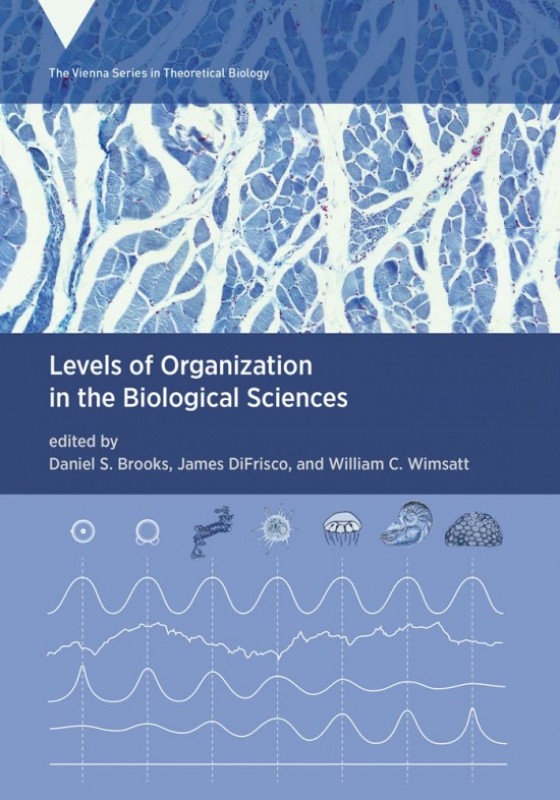
New book in Vienna Series in Theoretical Biology: Levels of Organization in the Biological Sciences
Edited by Daniel S. Brooks, James DiFrisco, and William C. Wimsatt, the new book examines a core structural principle in the biological sciences- the nature and significance of levels of organization.
2021-10-04
Neurodiversity and anthropomorphism in social insect research
Alice Laciny's new fellowship explores how the perceptions and approaches of neurodivergent researchers come into play within social insect research.
2021-02-24
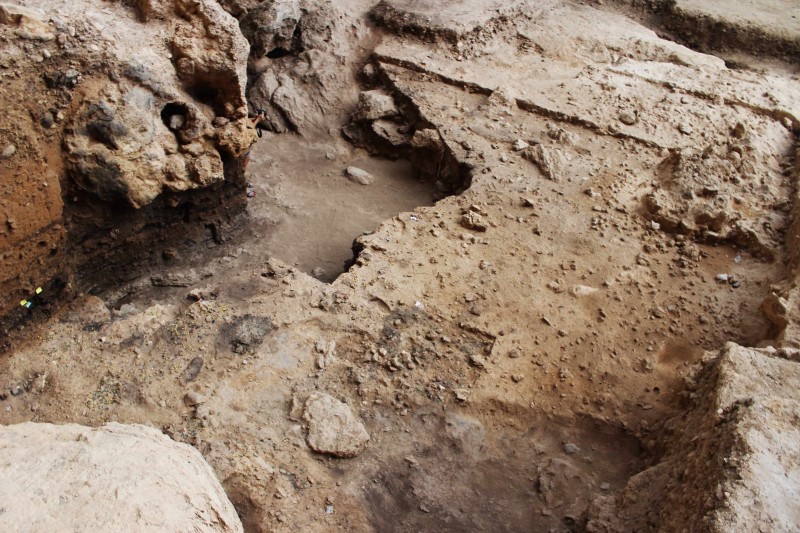
Neanderthal feces on fire illuminates gut microbiome features
KLI fellow Stephanie Schnorr writes about her latest paper in Communications Biology.
2024-05-10
Navigating the ‘Epistemological’ and the ‘Ethical-Political’ of Knowledge Co-Production in Inter- and Transdisciplinary Sustainability Research
Marina Knickel (KLI), 2024-05-16 15:00 (CET). To join our colloquium please register with Zoom

2023-07-10
Navigating collaboration: Introducing PLUS change
We are excited to announce our participation in PLUS Change, an international project aiming to transform land management strategies for social, climate, and biodiversity benefits.
2024-05-15
Narrative Discourse and the Process of Science
Corey BUNCE (KLI), 2024-05-23 15:00 (CET). To join our colloquium please register with Zoom

2020-02-10
Naeem revisits Naeem et al. 1994: Reading between the Lines of a Scientific Paper
KLI Colloquium: Hari SRIDHAR (National Centre for Biological Sciences, Bangalore), 25 February 2020, 5.00 pm
2018-04-26
Musical Capacities and Social Interaction: A Coevolutionary Approach
KLI Colloquium: Luis Alejandro Villanueva (KLI), 3 May, 3.00 pm
2021-06-11
Multiple Approaches to Understanding Human Pelvic Evolution – A Reappraisal of the Obstetrical Dilemma
Nicole GRUNSTRA (KLI), 17 June 2021, 3.00 pm. To join our colloquium please register with Zoom.
2020-12-07
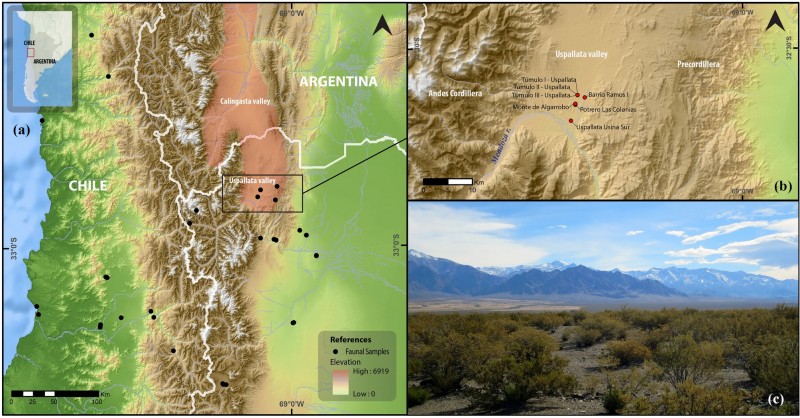
Multi-isotopic and morphometric evidence for the migration of farmers leading up to the Inka conquest of the southern Andes
KLI fellow Lumila Paula Menéndez and colleagues show a migration pulse preceding the Inka expansion from a northern maize-farming population that would have been part of a widespread period of change in settlement patterns, population movements, and social identities.
2019-10-28
Movie: Lumila MENÉNDEZ | Ten Thousand Years of Cranial Evolution in South America
"Why are humans so diverse? How do we evolve as a species?" KLI postdoc fellow anthropologist Lumila Menéndez talks about 10,000 Years of Cranial Evolution in SouthAmerica in 1.5 minutes!
2019-10-22
Movie: Luis Alejandro VILLANUEVA | The Origins of Music
"When and where did music start?"
Watch... and listen!... to KLI alum & guest researcher Alejandro Villanueva talk about his work on the cognitive origins of music and the roles they play in social interactions.
2019-10-01
Movie: Gregory Rupik | Goethe, Organisms, and Biology Today
"What if I told you that 19th century poet & playwright Johann Wolfgang von Goethe has something important to contribute to biology today?"
KLI Alum (IHPST, University of Toronto) introduces us to an organism-centric philosophy of biology.
2019-11-18
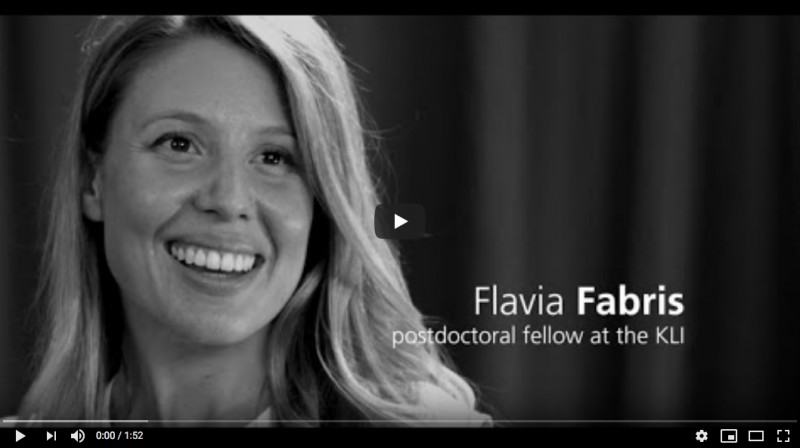
Movie: Flavia FABRIS | Rethinking the Role of Cybernetics in Theoretical Biology
Largely unnoticed, we live in a cybernetic era where automated systems are part of everyday life. In this video, Dr Flavia Fabris, explains the main ideas of her research on the contribution of cybernetics to the development of contemporary biology.

2019-11-04
Movie: Daniel J. NICHOLSON | Rethinking the Nature of the Organism
What makes organisms different from other complex organized systems like machines?" KLI postdoctoral fellow Daniel Nicholson discusses the ontology of living systems, how they differ from other complex systems, and what implications these differences have for biological theory.

2019-10-07
Movie: Christian Dorninger | Sustainable Biophysical Human-Nature Connectedness
"When you eat your daily meal do you ever ask yourself, where do the ingredients come from?"
KLI fellow Christian Dorninger works on the biophysical and mental connectedness between humans and nature, with implications for sustainability studies.
2019-10-14
Movie: Barbara FISCHER | Evolution of the Human Pelvis and Childbirth
"Why is birth so difficult in humans and why has evolution not resolved this obstetric dilemma?"
KLI postdoctoral fellow Barbara Fischer talks about evolutionary constraints and childbirth.
2019-11-25
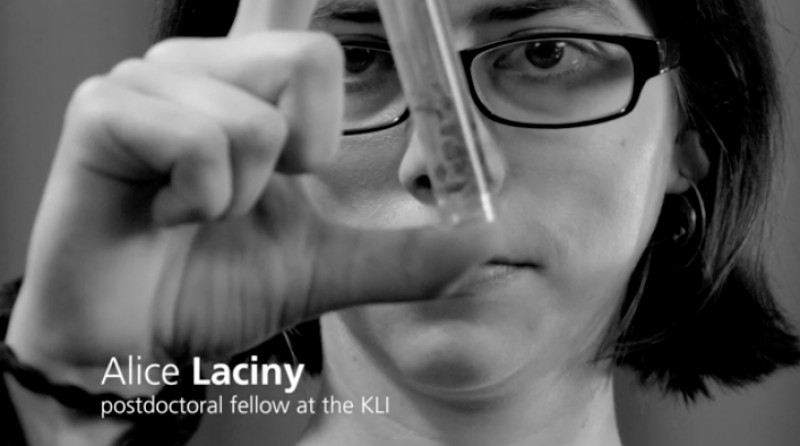
Movie: Alice LACINY | Parasite-Induced Morphologies in Ants
Alice Laciny, postdoctoral fellow at the KLI investigates the influence of parasites on the morphology of ant hosts. She aims to highlight the overlapping aspects of ecology, evolution and development.