

KLI Colloquia are invited research talks of about an hour followed by 30 min discussion. The talks are held in English, open to the public, and offered in hybrid format.
Join via Zoom:
https://us02web.zoom.us/j/5881861923?omn=85945744831
Meeting ID: 588 186 1923
Spring-Summer 2026 KLI Colloquium Series
12 March 2026 (Thurs) 3-4:30 PM CET
What Is Biological Modality, and What Has It Got to Do With Psychology?
Carrie Figdor (University of Iowa)
26 March 2026 (Thurs) 3-4:30 PM CET
The Science of an Evolutionary Transition in Humans
Tim Waring (University of Maine)
9 April 2026 (Thurs) 3-4:30 PM CET
Hierarchies and Power in Primatology and Their Populist Appropriation
Rebekka Hufendiek (Ulm University)
16 April 2026 (Thurs) 3-4:30 PM CET
A Metaphysics for Dialectical Biology
Denis Walsh (University of Toronto)
30 April 2026 (Thurs) 3-4:30 PM CET
What's in a Trait? Reconceptualizing Neurodevelopmental Timing by Seizing Insights From Philosophy
Isabella Sarto-Jackson (KLI)
7 May 2026 (Thurs) 3-4:30 PM CET
The Evolutionary Trajectory of Human Hippocampal-Cortical Interactions
Daniel Reznik (Max Planck Society)
21 May 2026 (Thurs) 3-4:30 PM CET
Why Directionality Emerged in Multicellular Differentiation
Somya Mani (KLI)
28 May 2026 (Thurs) 3-4:30 PM CET
The Interplay of Tissue Mechanics and Gene Regulatory Networks in the Evolution of Morphogenesis
James DiFrisco (Francis Crick Institute)
11 June 2026 (Thurs) 3-4:30 PM CET
Brave Genomes: Genome Plasticity in the Face of Environmental Challenge
Silvia Bulgheresi (University of Vienna)
25 June 2026 (Thurs) 3-4:30 PM CET
Anne LeMaitre (KLI)
KLI Colloquia 2014 – 2026
Event Details
Topic description:
Development translates genetic variation into phenotypic variation and determines the genotype-phenotype map. Any genetic change in the genotype-phenotype map reflects a change in developmental processes. I will discuss evidence for variation in pleiotropy and propose the SPC model (Selection, Pleiotropy, and Compensation) for adaptive evolution. It predicts that adaptive change in one character is associated with deleterious pleiotropy in others and subsequent selection to compensate for these pleiotropic effects. The SPC model provides a unifying perspective for a variety of puzzling phenomena including developmental systems drift, and character homogenization. I estimate that a great majority of adaptive signatures detected in genome scans are likely to be compensatory changes, rather than progressive trait adaptations.
Biographical note:
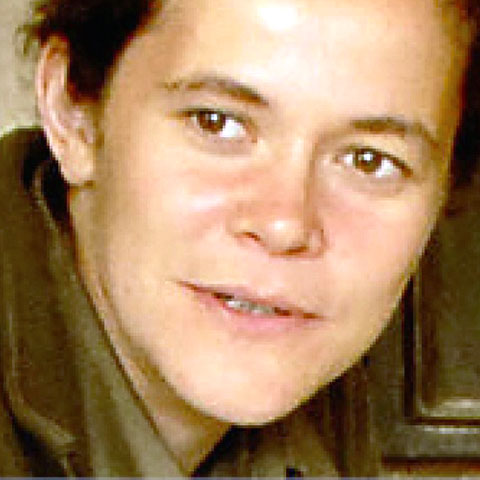
Mihaela Pavličev is currently a Lecturer in the Department of Theoretical Biology at the University of Vienna. She studied ecology at the University of Vienna (MA, 1998; PhD, 2003), and subsequently trained in molecular phylogenetics at the Natural History Museum in Vienna. She was a post-doc (as a Schrödinger Fellow) in quantitative genetics with Jim Cheverud at Washington University in St. Louis (2006-08), and in theoretical population genetics with Thomas Hansen at Oslo University (2008-2011).
Selected Publications:
Pavličev M, Hansen TF (2011) Genotype-phenotype maps maximizing evolvability: Modularity revisited. Evolutionary Biology 38: 371-389.
Pavličev M, Norgard EA, Fawcett GL, Cheverud JM (2011) Evolution of pleiotropy: Epistatic interaction pattern supports a mechanistic model underlying variation in genotype-phenotype map. Journal of Experimental Zoology (Molecular Development and Evolution) 316B: 371-385.
Pavličev M, Wagner GP, Cheverud JM (2011) Evolution of adaptive phenotypic variation patterns by direct selection on evolvability. Proceedings of the Royal Society London 278: 1903-1912.
Pavličev M, Le Rouzic AP, Wagner GP, Cheverud JM, Hansen TF (2010) Directionality of epistasis in a murine intercross population. Genetics 185: 1489-1505.
Pavličev M, Wagner GP, Cheverud JM (2009) Measuring evolutionary constraints through the dimensionality of the phenotype: Adjusted bootstrap method to estimate rank of phenotypic covariance matrices. Evolutionary Biology 36: 339-353.
Cheverud JM, Fawcett GL, Jarvis JP, Norgard EA, Pavličev M, Pletscher LS, Polonsky KS, Semenkovich CF, Bell GI (2010) Identification of Capn10 as a causal gene underlying obesity- and diabetes-related effects of the quantitative trait locus Adip1 derived from the LG/J by SM/J mouse intercross. Journal of Lipid Research 51: 907-913.
Pavličev M, Cheverud JM, Wagner GP (2009) Measuring morphological integration using eigenvalue variance. Evolutionary Biology 36: 157-170.
Wagner GP, Kenney-Hunt JP, Pavličev M, Peck JR, Waxman D, Cheverud JM (2008) Reply. Nature 456: 7222.
Norgard EA, Roseman CC, Fawcett GL, Pavličev M, Morgan CD, Pletscher LS, Wang B, Cheverud JM (2008) Identification of QTL affecting murine long bone length in a two generation intercross of LG/J and SM/J mice. Journal of Bone and Mineral Research 23: 887-895.
Wagner GP, Kenney-Hunt JP, Pavličev M, Peck JR, Waxman D, Cheverud JM (2008) Pleiotropic scaling of gene effects and the "cost of complexity." Nature 452: 470-472.
Pavličev M, Kenney-Hunt JP, Norgard AE, Roseman CC, Wolf J, Cheverud JM (2008) Genetic variation in pleiotropy: Differential epistasis as a source of variation in the allometric relationships between bone lengths and body weight. Evolution 62: 199-213.
Wagner GP, Pavličev M, Cheverud JM (2007) The road to modularity. Nature Reviews Genetics 8: 921- 931.
Pavličev M, Mayer W (2006) Multiple copies of coding as well as pseudogene c-mos sequence exist in three lacertid species. Journal of Experimental Zoology (Molecular Development and Evolution) 306B: 539-550.
