

KLI Colloquia are invited research talks of about an hour followed by 30 min discussion. The talks are held in English, open to the public, and offered in hybrid format.
Join via Zoom:
https://us02web.zoom.us/j/5881861923?omn=85945744831
Meeting ID: 588 186 1923
Spring-Summer 2026 KLI Colloquium Series
12 March 2026 (Thurs) 3-4:30 PM CET
What Is Biological Modality, and What Has It Got to Do With Psychology?
Carrie Figdor (University of Iowa)
26 March 2026 (Thurs) 3-4:30 PM CET
The Science of an Evolutionary Transition in Humans
Tim Waring (University of Maine)
9 April 2026 (Thurs) 3-4:30 PM CET
Hierarchies and Power in Primatology and Their Populist Appropriation
Rebekka Hufendiek (Ulm University)
16 April 2026 (Thurs) 3-4:30 PM CET
A Metaphysics for Dialectical Biology
Denis Walsh (University of Toronto)
30 April 2026 (Thurs) 3-4:30 PM CET
What's in a Trait? Reconceptualizing Neurodevelopmental Timing by Seizing Insights From Philosophy
Isabella Sarto-Jackson (KLI)
7 May 2026 (Thurs) 3-4:30 PM CET
The Evolutionary Trajectory of Human Hippocampal-Cortical Interactions
Daniel Reznik (Max Planck Society)
21 May 2026 (Thurs) 3-4:30 PM CET
Why Directionality Emerged in Multicellular Differentiation
Somya Mani (KLI)
28 May 2026 (Thurs) 3-4:30 PM CET
The Interplay of Tissue Mechanics and Gene Regulatory Networks in the Evolution of Morphogenesis
James DiFrisco (Francis Crick Institute)
11 June 2026 (Thurs) 3-4:30 PM CET
Brave Genomes: Genome Plasticity in the Face of Environmental Challenge
Silvia Bulgheresi (University of Vienna)
25 June 2026 (Thurs) 3-4:30 PM CET
Anne LeMaitre (KLI)
KLI Colloquia 2014 – 2026
Event Details
Topic description:
Scientists of various disciplines have been investigating the ability of many non-human species to count. Surprisingly, to date, and despite the wealth of data accumulated, no single coherent, evolutionary-driven account has been put forward. It is my goal here to outline such a model. This model departs from the mainstream thinking about this topic by putting the analytic emphases on rather overlooked phenomena, mainly ecology, and implementing it in a framework that binds together evolutionary theory, neurology, systems biology, and several sub-disciplines of psychology. The end result is - hopefully - a model that will be able to account for the complexification of cognitive traits in general.
Biographical note:
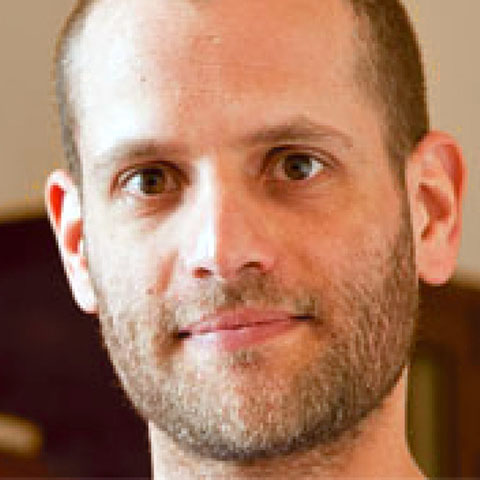
Eran Shifferman is completing his PhD at the Cohn Institute for the History and Philosophy of Science and Ideas, Tel Aviv University, devising an evolutionary model of quantity estimation in animals. He has an experimental background in zoology, and since his academic conversion has been intrigued by animal behavior in general and the question of the evolution of cognition in particular. Under this guise, he has taken an interest in other questions such as economic behavior, decision making, the perception of time, and teaching, and their weird and beautiful manifestations in the animal kingdom.
